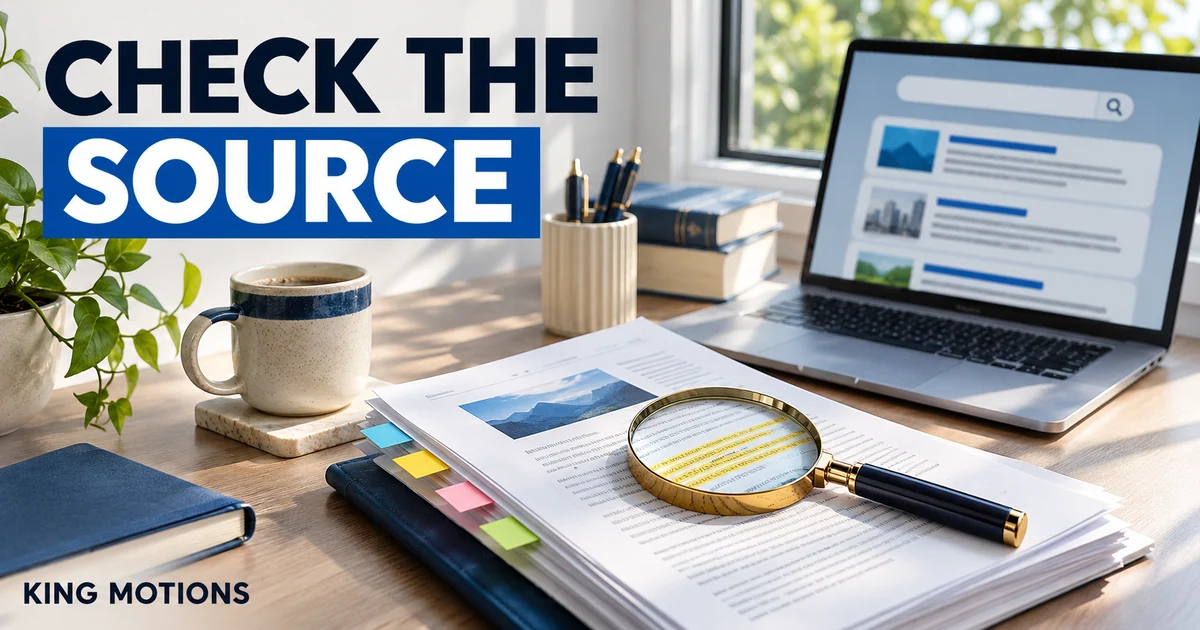
An answer with five citations looks reassuring until you open the first link and discover that it does not support the sentence. For Perplexity vs ChatGPT research, the useful comparison is how each tool helps you find, inspect and organise evidence for a particular question.
Do not choose a research assistant by the length of its answer. Choose a small question, check the underlying sources and count how much verification you still need to do. The workflow below is a proposed comparison method; it is not a claim that one assistant has won an accuracy test.
Choose one question with a checkable answer
Use a topic where you can recognise a primary source. For example: “What information should a small design studio confirm before buying a software subscription?” Ask for the current provider documentation, separate subscription facts from recommendations, and require a source next to each important factual claim.
Avoid starting with “Tell me everything about AI.” That creates a large essay with too many facts to check. A narrow question gives you a useful unit of work: a claim, its source and a decision about whether to keep it.
Perplexity's getting-started guide describes web answers with clickable sources. OpenAI's ChatGPT Search documentation explains its search experience and citations. Use the relevant search capability rather than assuming that every ordinary chat response has checked the web.
Make a small claim log
| Field | What to write |
|---|---|
| Claim | The exact fact you might publish. |
| Primary source | The provider page, original report or responsible organisation. |
| Relevant passage | A short note locating the supporting information. |
| Date and scope | When you checked it; country, plan or version it applies to. |
| Decision | Keep, qualify, replace or remove. |
Suppose an answer says a plan includes desktop apps. Open the cited page and check which exact plan it describes. A provider's entry-level storage subscription may be different from a desktop-app subscription. The brand name alone is not enough evidence.
Run three checks on every important citation
- Support: does the linked page actually say what the answer claims?
- Scope: is it discussing the same country, product, edition and customer type?
- Freshness: is there a newer provider page or an updated notice that changes the answer?
Keep those checks separate. A recent article can be wrong about the plan you need. An official page can be correct but apply to another country. A citation may support only half of a sentence that combines several claims.
When a source does not load, do not keep the claim merely because the assistant presents it confidently. Find another primary source or remove the unsupported detail. If two reliable pages disagree, record the disagreement and its dates instead of asking the tool to smooth it into a tidy answer.
Compare the work left after the answer
Give both tools the same question and the same date requirement. Record whether the cited pages load, how many important claims are supported and which facts need correction. Also record whether the answer distinguishes a provider's official offer from a reseller package.
Then ask one follow-up: “Which statements in your answer are recommendations rather than sourced facts?” This is useful for editing, but it is not a substitute for checking the pages yourself. An assistant can make mistakes while explaining its own output.
For your next article, repeat the exercise with a different topic. One good answer to one question does not establish that a tool is always more accurate. Keep the notes so your choice reflects the work you do repeatedly.
Turn verified notes into your own draft
Write from the claim log after verification. Keep exact prices, dates and restrictions close to their citations. Add your own explanation of what those facts mean for the reader, and label examples as examples. Do not copy a long source passage just because an assistant has summarised it.
For drafting rather than evidence gathering, use the ChatGPT versus Claude writing exercise. The two jobs benefit from different scorecards: research needs support and scope; writing also needs tone, structure and revision control.
Compare Perplexity packages, ChatGPT packages and Claude Pro access only after deciding which job is slowing you down. Check the actual access arrangement before uploading confidential research material.
Research questions
Does a citation mean the answer is correct?
No. Check that the source supports the exact claim and applies to the same situation. A working link is only the start of verification.
Should I use only official sources?
Use primary sources for provider rules and product facts. Independent evidence can help evaluate performance, but inspect its method and relevance rather than treating a promotional comparison as a test.
Which paid plan do I need for reliable research?
A paid label does not remove the need to verify claims. Check current search features and limits in the selected package, and try the workflow before buying more access.